

SUMMIT KIDS SUPERVISION POLICY
Attributes
Articulate Storyline
HTML/CSS
Photoshop
Instructional Design
Branding
Character Design
UX Design
Client
Summit Kids
Summit Kids Learning Module: Supervision Policy
Introduction:
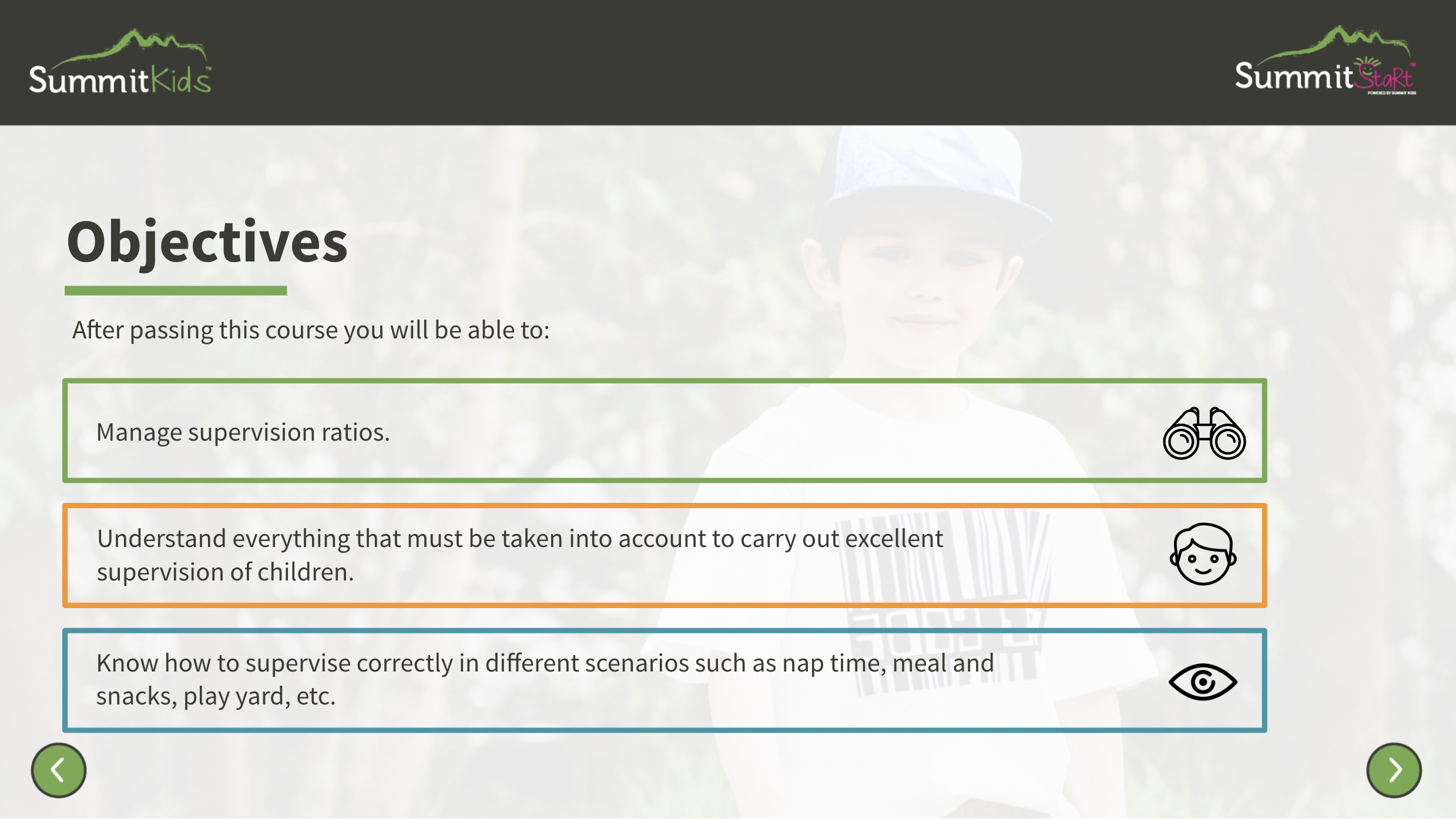
The Storyline module titled "Supervision Policy" aims to train Summit Start team members on effective child supervision techniques during events. Targeting those responsible for supervising children, the module's objectives include managing supervision ratios and mastering techniques for various scenarios. Challenges addressed involve ensuring consistent and effective supervision practices across different event contexts.
Overview of the Module:
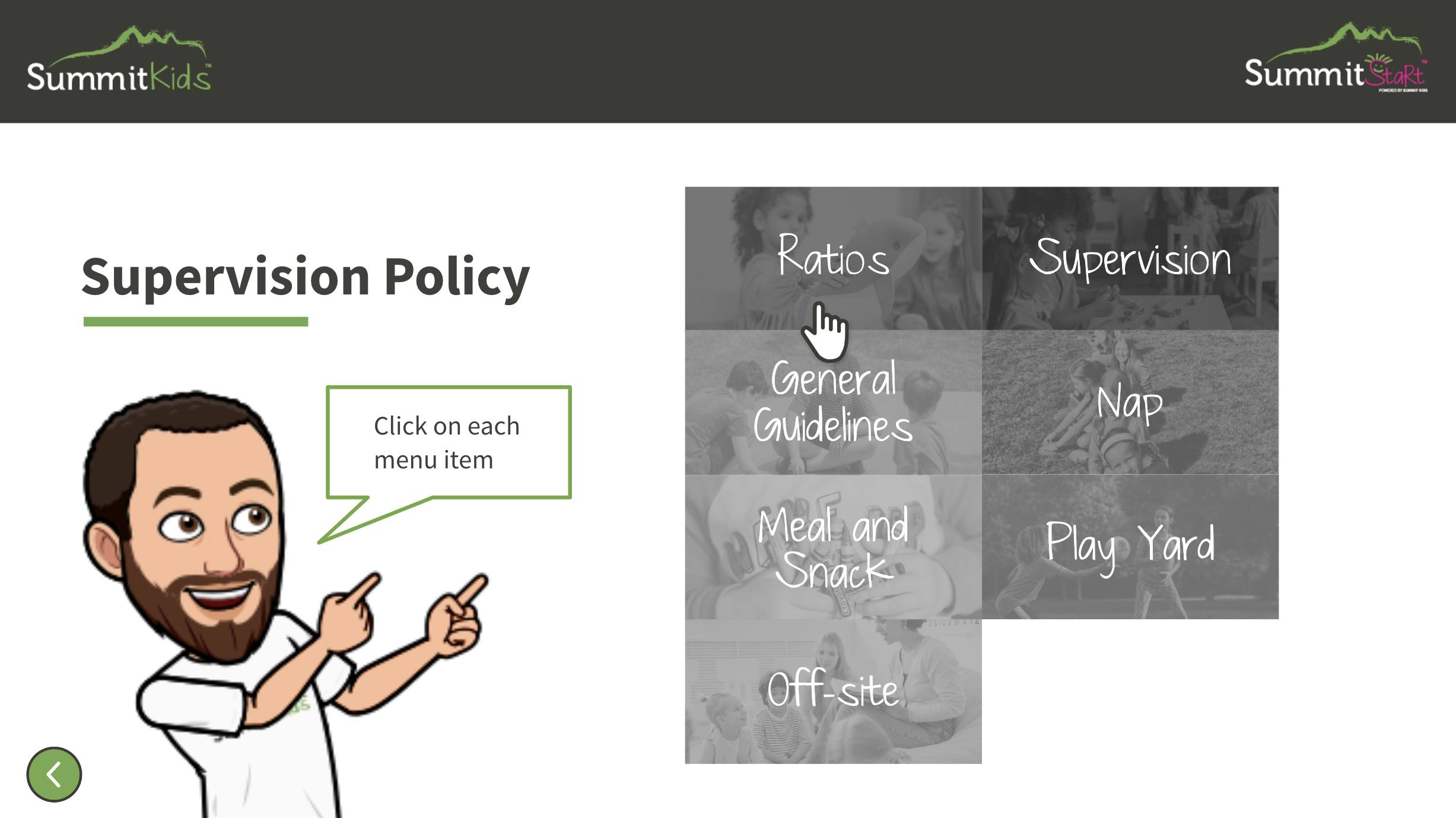
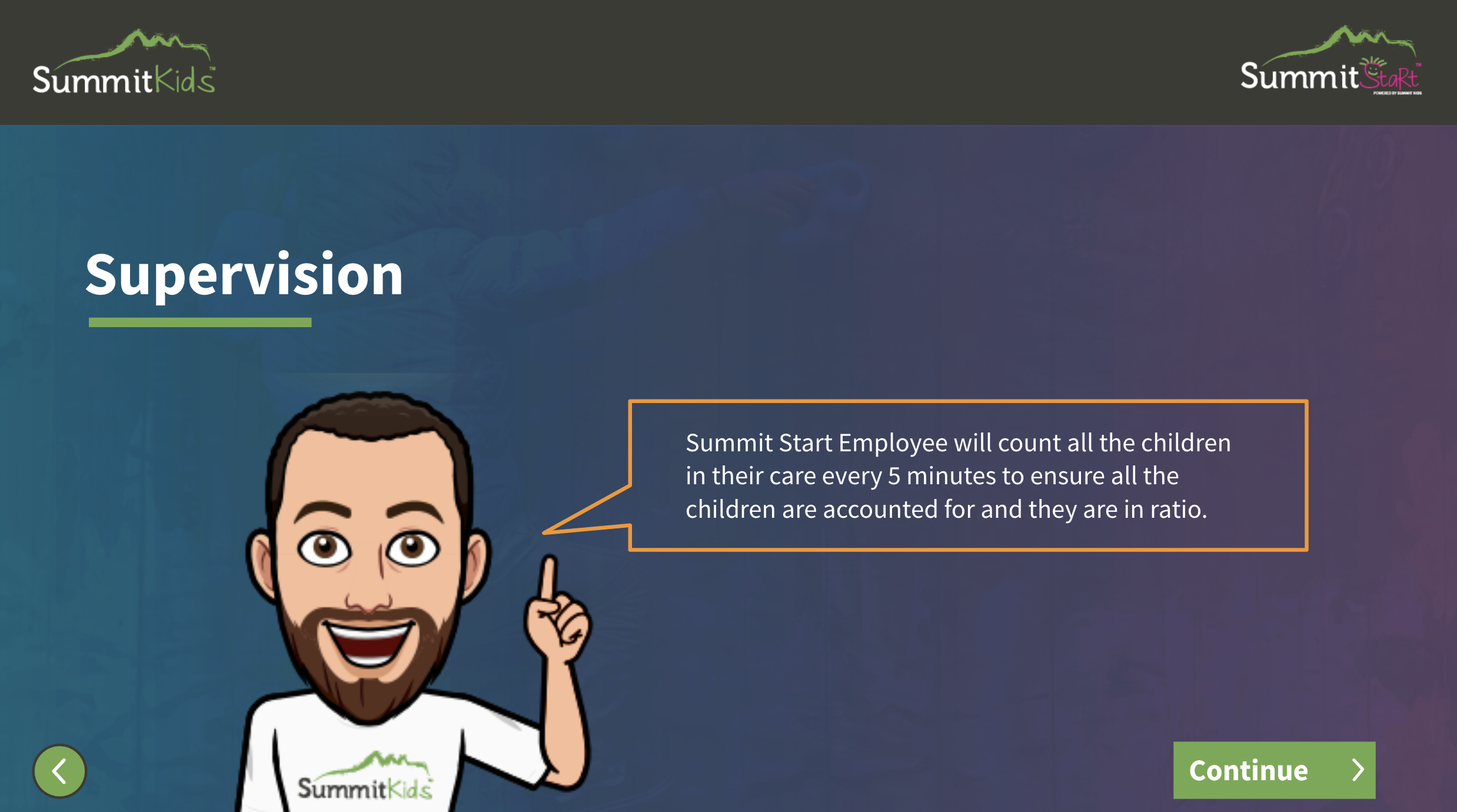
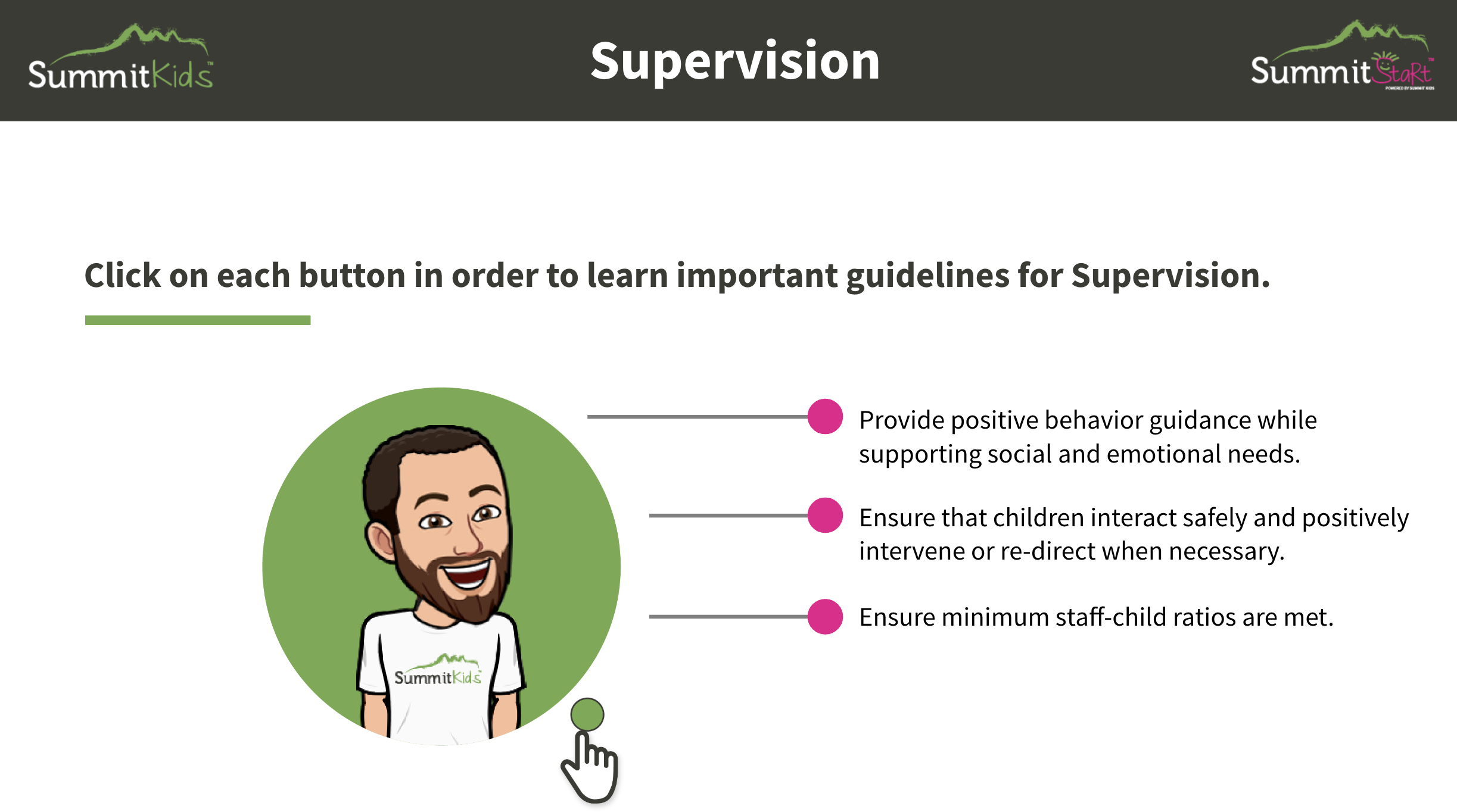
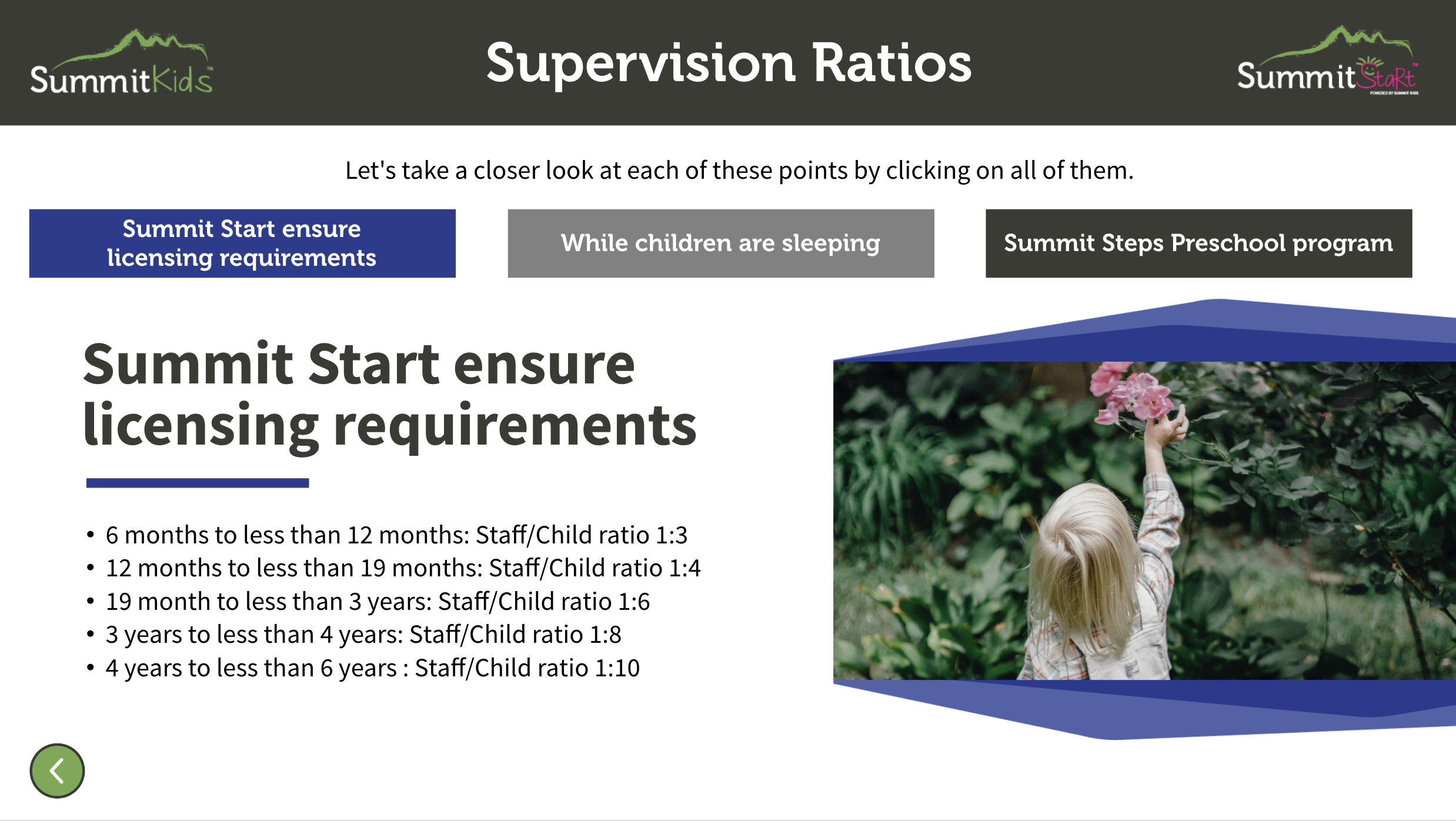
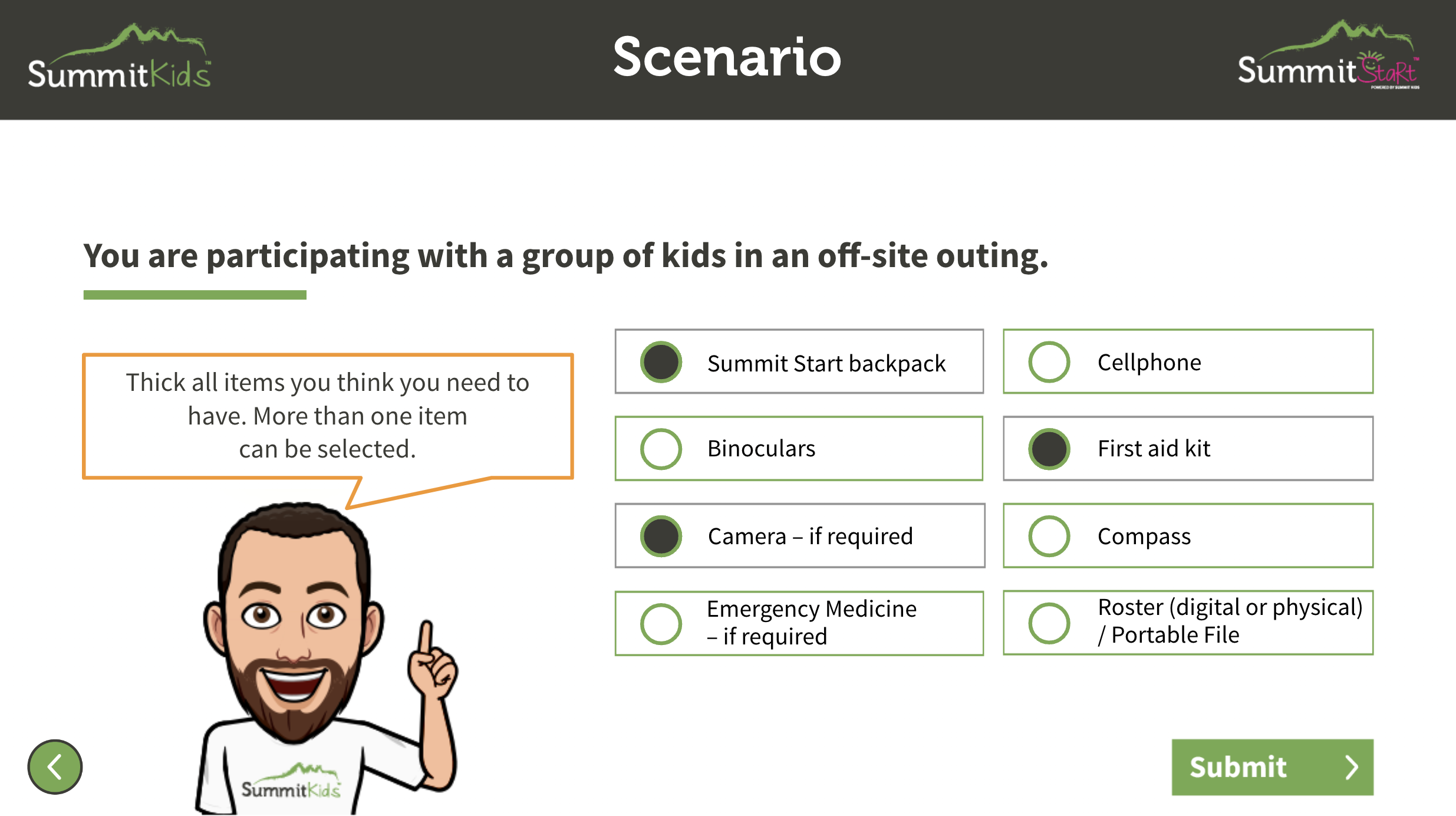
Structured into sections covering supervision importance, ratios, key considerations, and practical techniques, the module boasts user-friendly navigation and engaging interactive elements like scenario simulations and quizzes. Unique design elements, including visually appealing graphics and branching scenarios, enhance learner engagement and comprehension.
Screenshots of the project and character creation:
For this project, the decision to use a masculine character design similar to a previous one was made by the company, rather than being a personal choice. The company opted for a character design that aligns with their established branding and visual identity, aiming to maintain consistency across their training materials. The character was crafted to be friendly, aesthetically pleasing, and cartoon-like, reflecting the company's values of approachability and inclusivity. Despite not being my personal selection, I ensured that the character design met the company's requirements and effectively served its intended purpose within the module.
Description of Design Process:
Beginning with research on effective child supervision practices, the design process incorporated instructional strategies such as scenario-based learning and scaffolded experiences. Decisions on content presentation and interaction design prioritized learner engagement and comprehension, ensuring clarity and accessibility.
Learning Objectives Alignment:
The module's design directly aligns with stated objectives, providing activities and content reinforcing each objective. Features like interactive scenarios and quizzes are tailored to support learning objectives and assess learner understanding.
User Experience and Accessibility:
Incorporating UX principles ensured smooth navigation and engagement, while efforts toward accessibility compliance included screen reader compatibility and keyboard navigation.
Assessment and Feedback:
Module assessments include quizzes, knowledge checks, and scenario simulations to evaluate comprehension, supported by immediate feedback mechanisms highlighting correct answers and explaining concepts as needed.
Results or Feedback:
Data from completed modules indicate high completion rates and positive feedback, with observed outcomes including increased confidence among team members in supervising children during events.